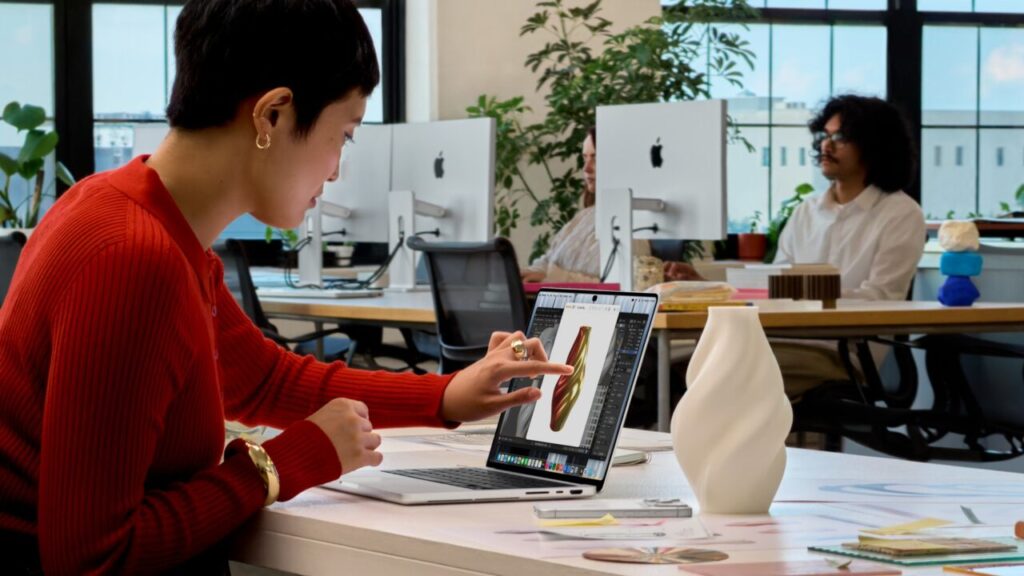
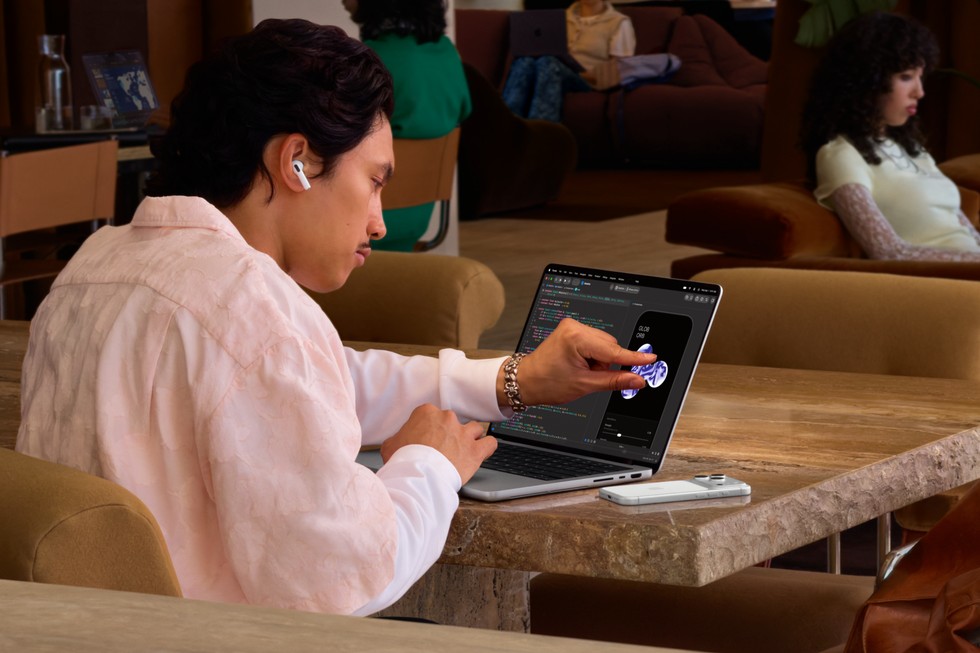
When Apple unveiled the MacBook Pro with the PROLED XDR display, the first touchscreen Mac ever, half the internet pulled up the same video: Steve Jobs in 2010 explaining why a laptop with a touchscreen made no sense. Sixteen years later, Apple is doing exactly that. So the question is unavoidable: is Apple going against Jobs’s ideas? Let’s take it step by step.
What Steve Jobs said in 2010
It was October 2010, at the “Back to the Mac” event where he introduced OS X Lion. Jobs showed a hand touching a laptop screen and explained that Apple had done a lot of user testing and it didn’t work: touch surfaces don’t want to be vertical, after a while your arm gets tired, and what looks great in a demo ends up being, in his words, “ergonomically terrible.” His conclusion was to bring gestures to the trackpad, which sits horizontally, not to the screen.
It wasn’t just Jobs: Apple repeated it for years
What’s interesting is that the idea outlived Jobs and became almost doctrine:
- Tim Cook (2012) compared merging a tablet and a laptop to combining a toaster and a refrigerator.
- Craig Federighi (2014 and 2018) said they had tried it and weren’t convinced, and that raising your arm to touch the screen is tiring.
- Phil Schiller (2016) argued that you can’t optimize for touch and for a pointer at the same time.
- John Ternus (2021), now CEO, said the Mac was fully designed for indirect input (keyboard and trackpad) and that they saw no reason to change that.
How Apple justifies it now
In interviews with Wired, Apple executives give three arguments:
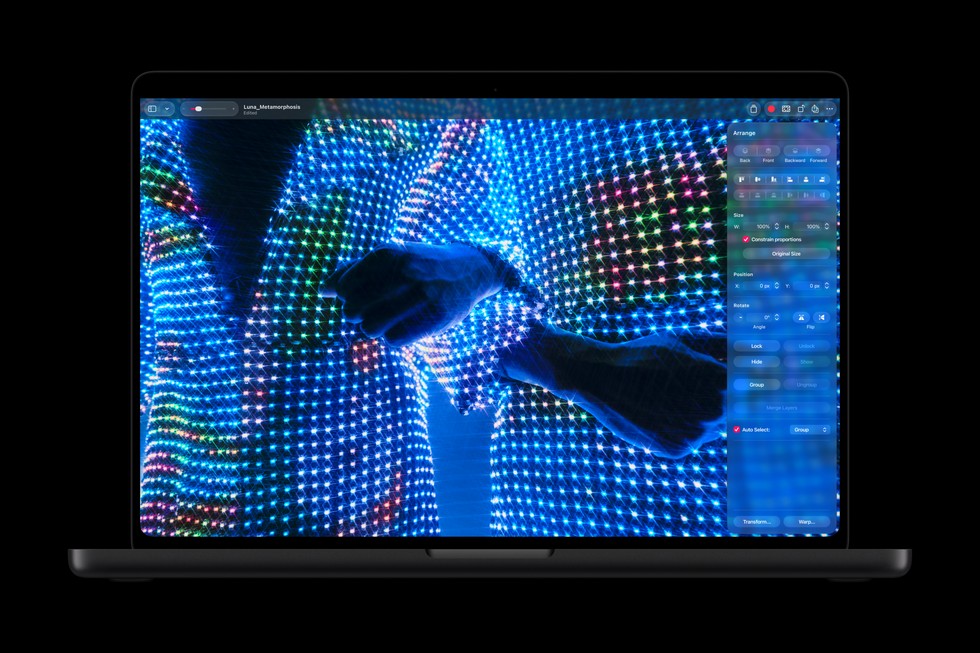
- It no longer costs anything. Ternus explains that the sensor is built into the OLED panel itself, so touch doesn’t make the laptop thicker or heavier. In fact, the 14-inch model weighs about 220 grams (roughly half a pound) less than its predecessor.
- The technology has matured. Johny Srouji, Apple’s hardware chief, says the display, chips, and software have finally reached the level Apple demanded.
- Users expect it. Greg Joswiak talks about a generation of young creators who grew up with the iPhone and iPad and take it for granted that they can touch the screen.
And one important detail: Ternus insists the Mac is still first and foremost an indirect-input device, with the keyboard and trackpad front and center. Touch is an extra. Apple has strengthened the hinge so the display doesn’t wobble when you touch it and has adapted macOS with more widely spaced menus and other tweaks designed for fingers.
The case for “yes, it goes against him”
There are reasons to think so. The problem Jobs pointed out wasn’t thickness or weight; it was the arm. And that problem is exactly the same: a laptop display is still vertical and at the same distance. Apple hasn’t explained how it solves arm fatigue. Also, for more than a decade, Apple used this argument to set itself apart from touchscreen Windows laptops. Changing its tune now, and charging about $400 more for it, looks a lot like admitting the others were right.
The case for “no, it’s what Jobs would do”
But it’s also worth remembering who Jobs was. In 2007 he mocked phones with styluses, and in 2015 the Apple Pencil arrived. In 2010 he dismissed 7-inch tablets, and in 2012 Apple launched the iPad mini. And Jobs himself started out championing web apps for the iPhone before opening the App Store in 2008. Jobs changed his mind, a lot, when the technology or the product justified it. What he didn’t do was ship something that made the experience worse.
And here, Apple hasn’t turned the Mac into an iPad: there’s no tablet mode, the screen doesn’t fold back, and macOS is still designed for keyboard and trackpad. It’s more of a “just in case” for zooming into a photo, turning a page, or tapping a button without hunting for the cursor.
My take
I don’t think Apple is going against Jobs’s ideas, but it is going against one of his quotes. Jobs’s underlying idea was not to sacrifice the experience for a trend. In 2010, adding a touch layer to a laptop meant more thickness, more weight, a worse display, and an operating system that wasn’t designed for fingers. Today, if what Apple says is true, you don’t lose anything by having it.
What I do think is fair to acknowledge is that the tired-arm objection still stands, and that Apple has dodged that question. That’s why I think the key is how you use it: if it’s for touching something now and then, it makes perfect sense; if someone expects to work for hours with their finger on the screen, Jobs will still be right. When I get to try it properly at an Apple Store, I’ll let you know how it goes.
What do you think? A betrayal of Jobs or a logical evolution? Let me know in the comments or on social media.
Sources: Fast Company, Xataka, MacRumors, Windows Latest, Engadget.