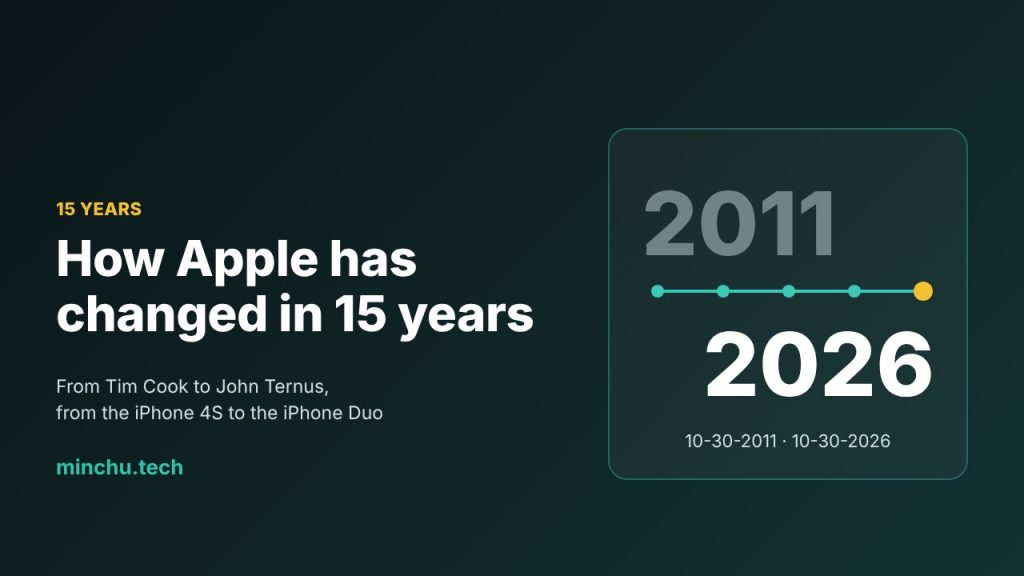
Yesterday, October 30, I marked 15 years living in Germany. Looking back, I realized that it’s not only my life that has changed in all this time: technology, for me, has evolved too.
Back then I didn’t own anything from Apple. I used a BlackBerry, or even Android phones from Chinese brands that don’t exist anymore, and one of those 10-inch netbooks that were so popular at the time. My first Apple device didn’t arrive until late 2012, and it was… an Apple TV. Then came a third-generation iPad and, from there, I couldn’t stop until the Apple ecosystem became my best tool.
So I did the exercise of looking back exactly 15 years, from October 30, 2011, to October 30, 2026, to see what Apple was like then and what it’s like today. With dates, with numbers, and separating the facts from my own reading of them.
October 2011: an Apple that had just lost its founder
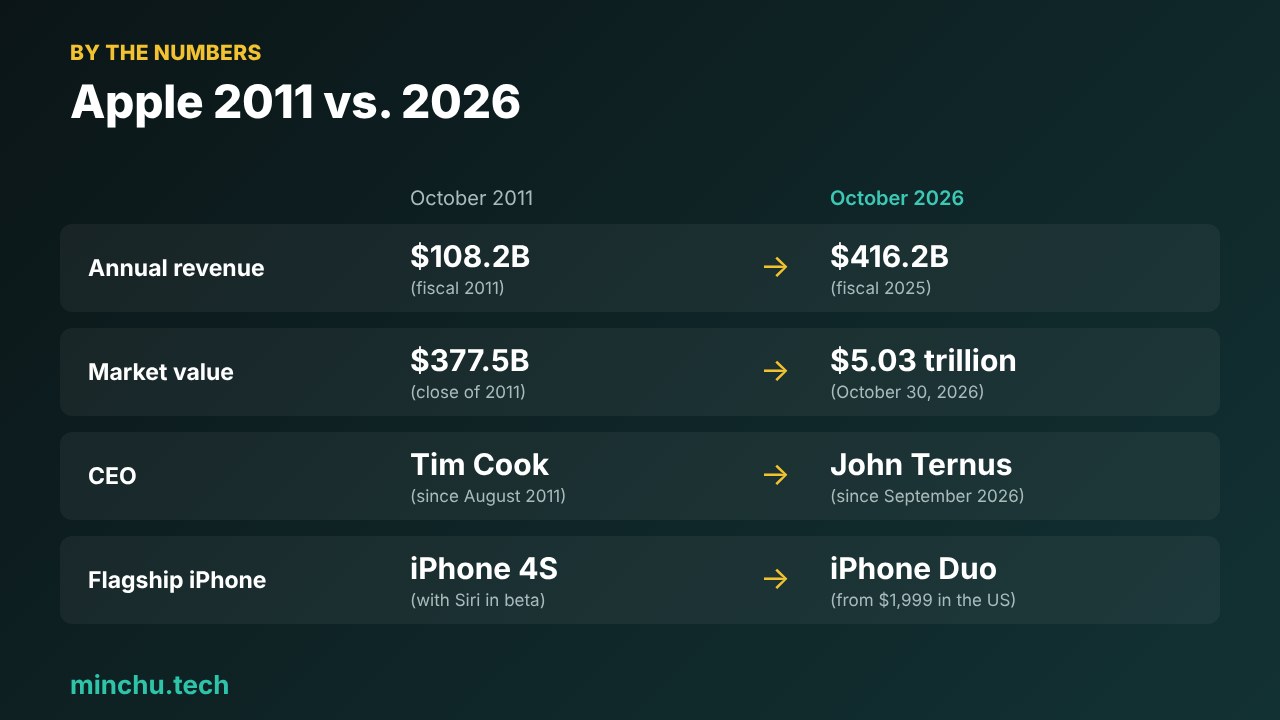
October 2011 was a strange month for Apple. Tim Cook had taken over as CEO in August and, barely six weeks later, Steve Jobs died, as TechCrunch recalled when his successor was announced this year. One day earlier, on October 4, Cook had introduced his first iPhone as boss: the iPhone 4S.
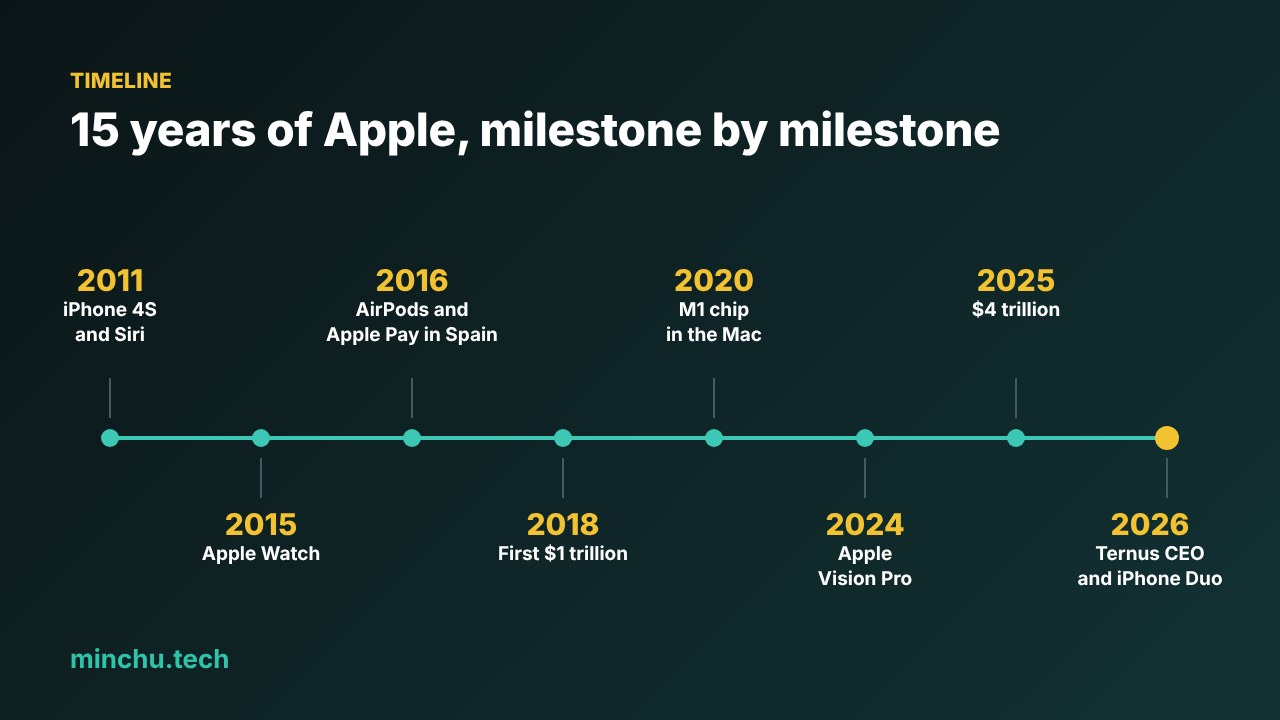
On the outside it was almost an iPhone 4. The news was inside: the A5 chip and, above all, Siri. It hit stores on October 14 in the US, Germany, France, the UK, Canada, Australia and Japan, and Siri debuted in beta and only in English, French and German (Apple’s press release as reported by Engadget). Spain wasn’t in the first wave of countries, and Spanish wasn’t among the languages.
The numbers back then: Apple closed its fiscal 2011 (which ends in September) with $108.25 billion in revenue and $25.92 billion in profit, and in its last quarter sold 17.07 million iPhones (Apple’s official results). On the stock market it ended 2011 worth about $377.5 billion (CompaniesMarketCap).
What came in between
New categories: Apple Watch and AirPods
The first new category of the Cook era was the Apple Watch, which went on sale on April 24, 2015, in nine countries, including the US and Germany but not Spain (eCoustics). A year and a half later, in December 2016, AirPods arrived (iClarified), and today it’s hard to imagine the lineup without them.
Paying with the iPhone: here Spain was ahead
For once, Spain beat Germany: Apple Pay arrived there on December 1, 2016, with Banco Santander (Applesfera), while in Germany it didn’t land until December 11, 2018 (Apple Newsroom Germany). A two-year gap in the land of cash. In the US, of course, Apple Pay had been around since October 2014.
The Mac moves to its own chips
On November 10, 2020, Apple introduced the M1 and the first Macs without Intel: MacBook Air, 13-inch MacBook Pro and Mac mini, with a transition planned to take about two years (MacRumors). The person who brought those Macs onto the virtual stage was, by the way, John Ternus, then head of hardware engineering.
Vision Pro, the most expensive bet
Apple Vision Pro launched in the US in February 2024 at $3,499 and reached Germany on July 12 that year, starting at €3,999 (Apple Newsroom Germany, PC Games Hardware). It’s the product that best sums up the ambition of these years, and also the one that has raised the most doubts.
From $377 billion to $5 trillion
On the stock market, Apple was the first public company to reach $1 trillion, on August 2, 2018, and $2 trillion on August 19, 2020 (9to5Mac). It passed $3 trillion in January 2022 (iPhone in Canada), $4 trillion on October 28, 2025, and $5 trillion for the first time during the trading session of July 28, 2026, according to the same 9to5Mac article. It didn’t close a session above that mark until October 14, 2026 (The Apple Post).
October 2026: today’s Apple
The most symbolic change came two months ago: since September 1, 2026, Apple’s CEO has been John Ternus, and Tim Cook has become executive chairman of the board after 15 years at the helm (MacRumors). Ternus, 51, has spent almost his entire career at Apple (TechCrunch). In other words: the 15 years in this article line up almost to the day with the Cook era.
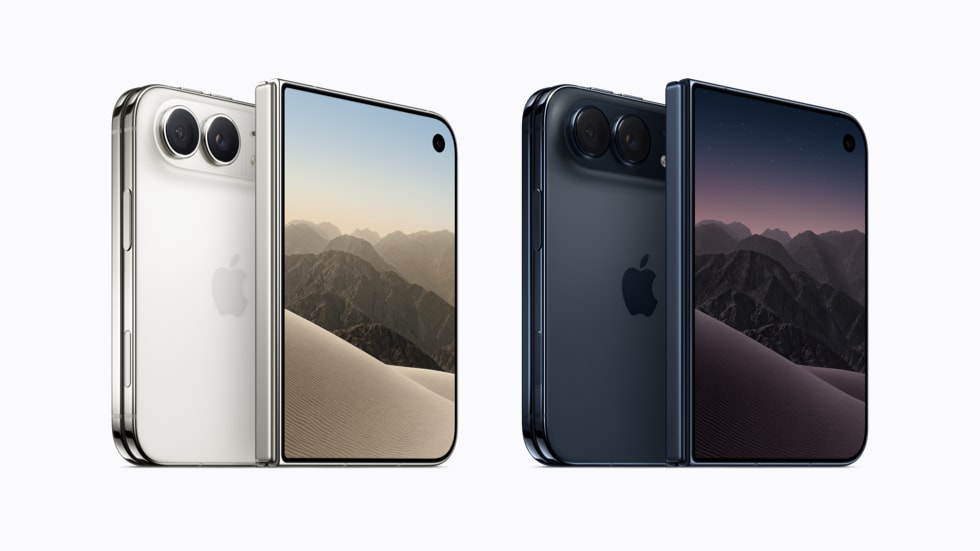
And this fall’s flagship iPhone is the first foldable one. The iPhone Duo went on sale on October 23 and starts at $1,999 in the US (€2,339 in Spain), the most expensive iPhone launch to date (Xataka Móvil).
Siri, which was born with the 4S, has also come full circle in its own way: with iOS 27.2, Siri AI now speaks Spanish, but on the iPhone it’s still blocked in the European Union, as I explained in how to use Siri AI in Spanish. In 2011 Siri spoke German before Spanish; in 2026 Siri AI speaks Spanish, but those of us living in Europe are still waiting.
Today’s numbers: Apple closed its fiscal 2025 with $416.16 billion in revenue and $112.01 billion in profit (PhoneArena), has more than 2.5 billion active devices worldwide, as it announced in January 2026 (MacRumors), and on October 30, 2026, it was worth about $5.03 trillion on the stock market (StockAnalysis). Full-year fiscal 2026 results come out on November 2, in Ternus’s first earnings call as CEO (MacRumors).
What has really changed (my take)
With the data above on the table, there are three things I think matter most:
- Services are a whole other Apple now. In fiscal 2025, services (App Store, iCloud, Apple Music, Apple Pay…) brought in $109.16 billion (Constellation Research). That’s more than all of Apple, iPhone, Mac and iPad included, made in fiscal 2011.
- The iPhone is still in charge. With $209.59 billion in fiscal 2025, the iPhone still accounts for just over half of revenue (50.4%, by my math with PhoneArena’s figures). Fifteen years and many new categories later, Apple is still, above all, the iPhone company.
- For Europe, hardware arrives at the same time; software doesn’t. In 2011 the iPhone 4S took a while to reach Spain; in 2026 the iPhone Duo launched the same day in Europe as in the US. What gets delayed now are the features: Apple ties the Siri AI block in the EU to the Digital Markets Act (DMA).
In round numbers: in these 15 years Apple has nearly quadrupled its annual revenue (from $108 billion to $416 billion) and multiplied its market value more than thirteenfold.
What about you? What Apple gear did you have in October 2011, and what do you use today? Tell me in the comments and, if you want a roundup of the most important Apple news every week, sign up for The Sunday Keynote.