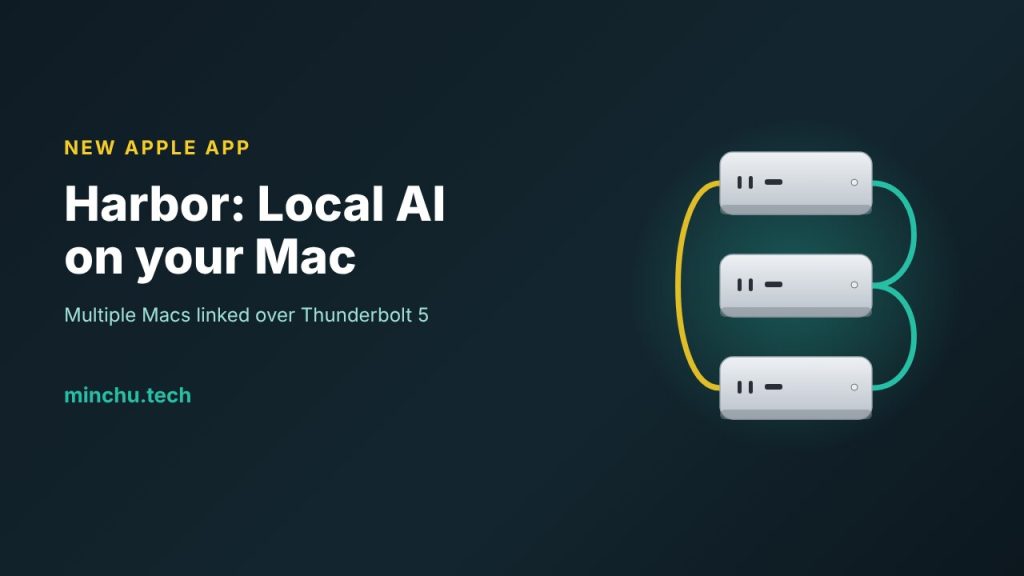
Claris, the Apple subsidiary behind FileMaker, is testing Harbor, an app that runs AI models locally on an Apple silicon Mac and can link several Macs over Thunderbolt 5 to pool their memory. For now it’s early access only, with no price or release date.
What Harbor does
Harbor turns a Mac into a private AI inference server. You browse, download and run open-weight models from inside the app, with no Terminal and no manual setup. According to Claris, your data stays on your hardware and nothing goes to the cloud.
It works on a single Apple silicon Mac, but that’s not the headline feature.
Several Macs, one pool of memory
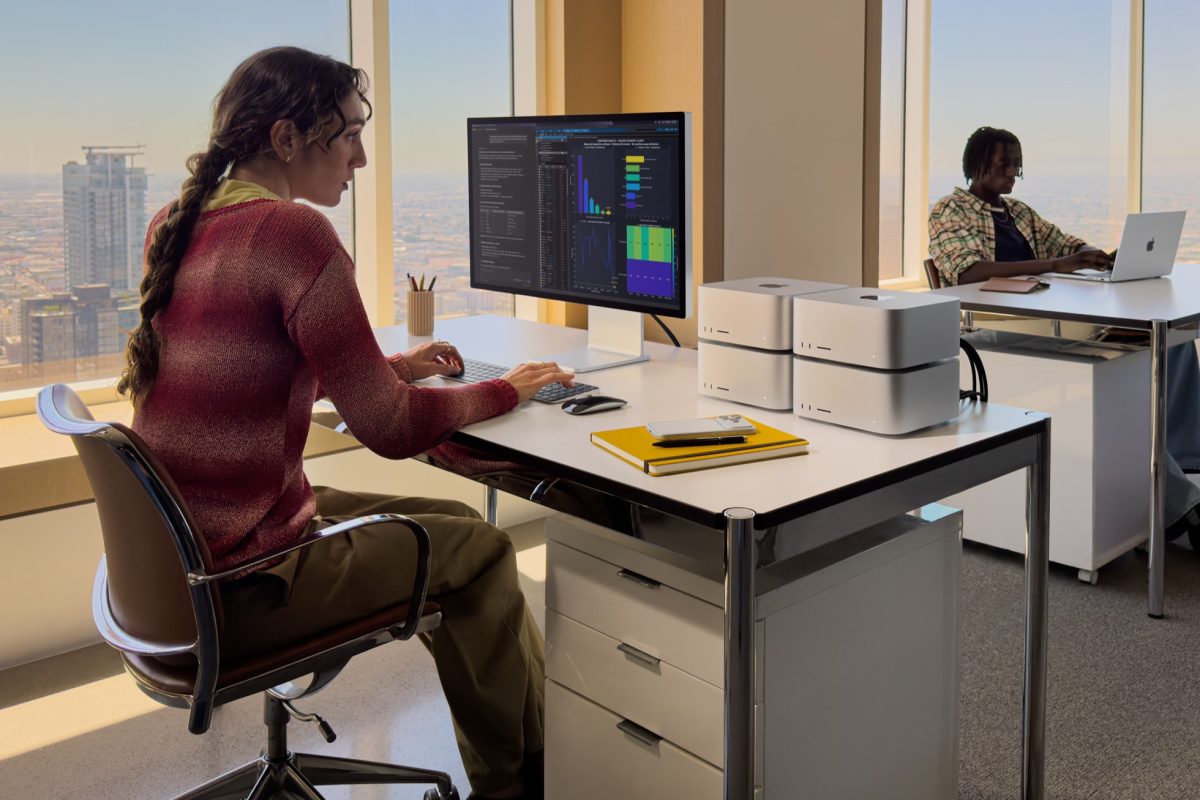
Connect two or more Thunderbolt 5–capable Macs and Harbor detects them automatically, combining their unified memory into a single inference resource. That lets you run models too big for one machine or handle more requests at once.
It builds on RDMA over Thunderbolt 5, which Apple added in macOS Tahoe 26.2 to speed up Mac-to-Mac connections. Until now, using it meant tools like Exo and a fair amount of technical work. Harbor promises plug in and go.
What’s confirmed and what isn’t
- Confirmed: Harbor exists and is in private early access under the Claris brand. The sign-up page asks for a company name. An App Store listing briefly appeared and has since been pulled.
- Not announced: pricing, release date, or whether it will be free.
- Our read: Claris building it, plus the company-name field, points to a business focus.
What it means for you
A single Apple silicon Mac is enough to run Harbor on its own. Clustering requires at least two Macs with Thunderbolt 5, which not every model has; it typically comes with Pro, Max or Ultra chips. Check your Mac’s tech specs on Apple’s site before buying anything.
If you already run local AI, free options exist today: LM Studio for a single Mac and Exo for clusters.
My take
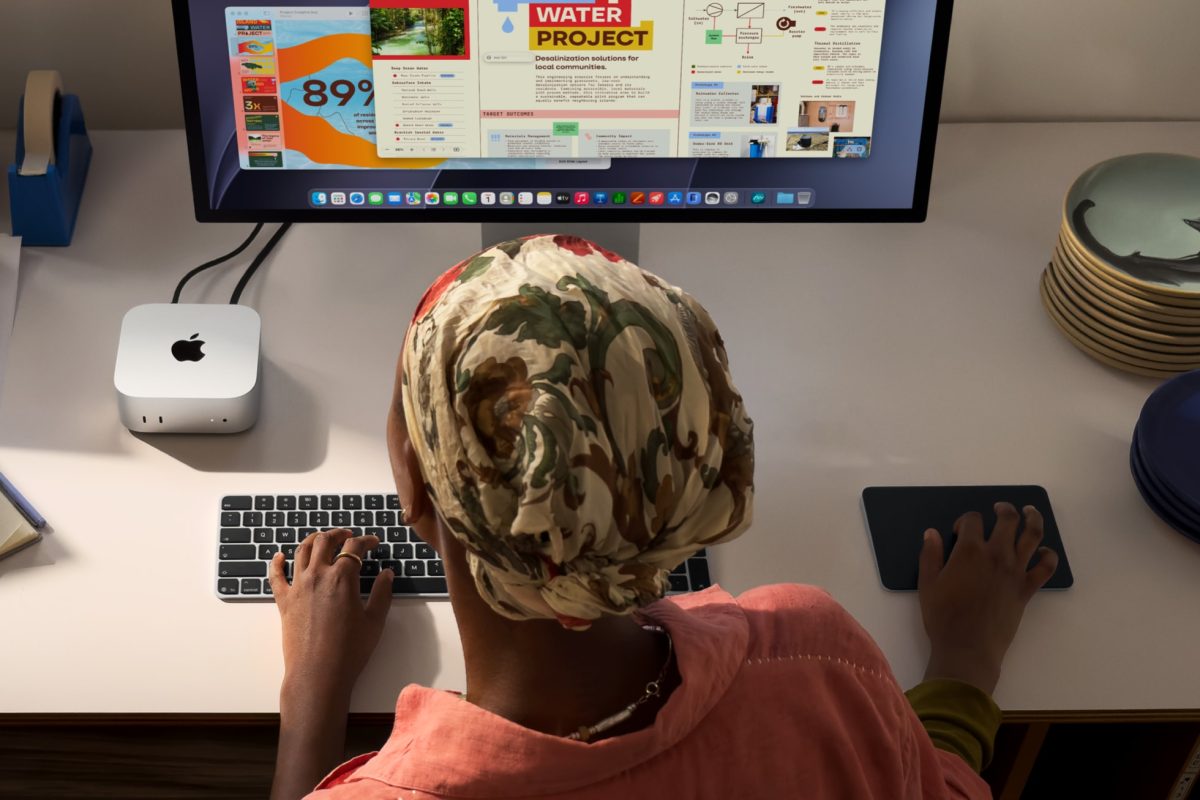
What makes Harbor interesting isn’t the technology, which already existed, but who’s shipping it. If Apple packages local AI with its usual simplicity, a Mac Studio or Mac mini could become a real alternative to paying for cloud AI subscriptions, especially for businesses that want their data to stay in-house.
The odd part is the Claris branding instead of Apple’s own name: it feels like a quiet test before a bigger bet. At the right price, Harbor could be one of those apps that tips a buyer toward a Mac over a GPU-equipped PC.
Do you already run AI models locally? Would you build a Mac cluster at home or at work? Let me know in the comments or on social media.
Sources: MacRumors, 9to5Mac. Information as of November 12, 2026.