I started just two months ago, for a simple reason: I wanted to improve my health. The starting point wasn’t easy. Quite a few extra pounds, joint pain, and work shifts that don’t leave much room to improvise.
This time I didn’t rely on willpower alone. I leaned on artificial intelligence to get organized, and I’ll tell you how: what’s working for me and also what I still struggle with.
One thing before we go on: this is what works for me, not medical advice. AI gets things wrong sometimes, so if you’re thinking about changing your diet, fasting, or adjusting when you take your medication, talk to your doctor first. I did.
What I eat (and why almost everything goes through the air fryer)
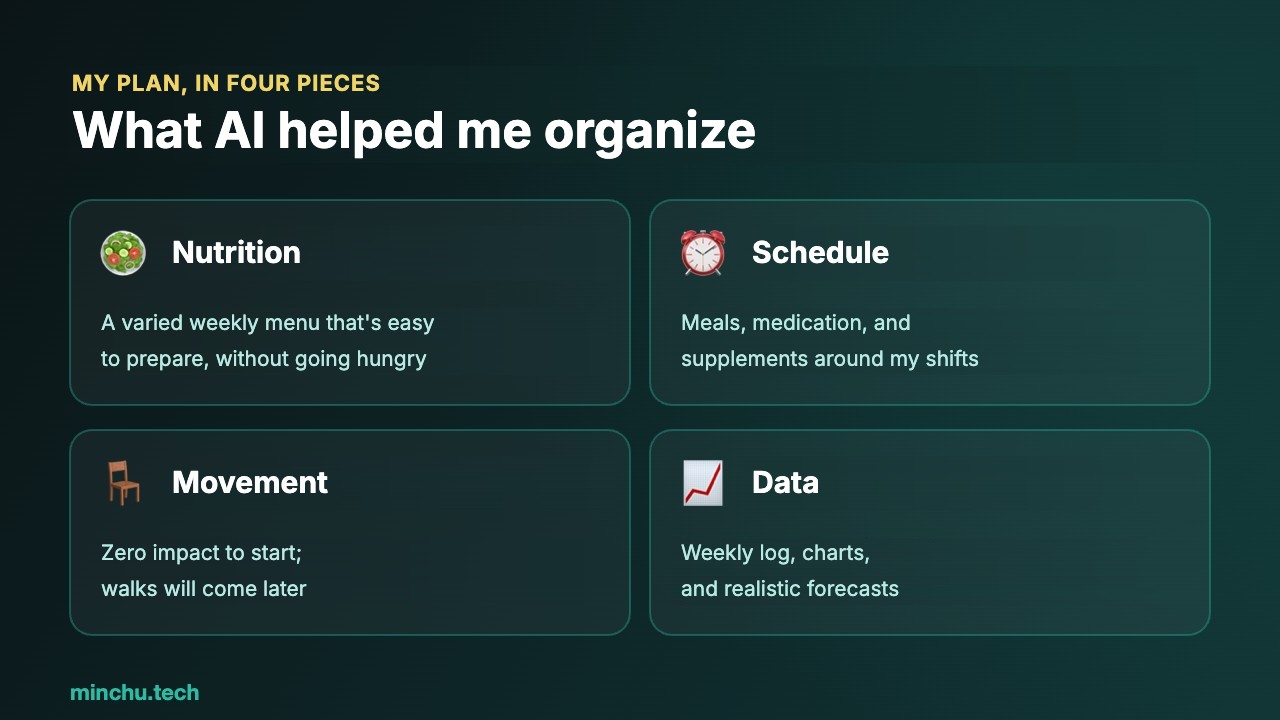
I asked AI for a weekly menu I could make without complications and that would help with water retention. What I eat most now is fish and vegetables, and I almost always cook them in the air fryer, the same one I showed you when I admitted I’d fallen for the trend. In a few minutes my meal is ready, and with my shifts, that makes all the difference.
It also helped me spread my meals around my work breaks, so I don’t show up starving to the next one.
Fasting: easy in the morning, hard at night
I do intermittent fasting adapted to my shifts. In the morning it’s no effort at all, because I’ve never been one to wake up hungry. Afternoons and evenings are another story: that’s when I get hungriest and when it’s hardest to stick to the plan. If you ask me what the hardest part of all this is, that’s it.
AI explained to me that, in this first stage, diet matters most, with a well-organized calorie deficit, more than exercise. In my case that makes perfect sense, for reasons I’ll get to a bit further down.
Medication and supplements, each at the right time
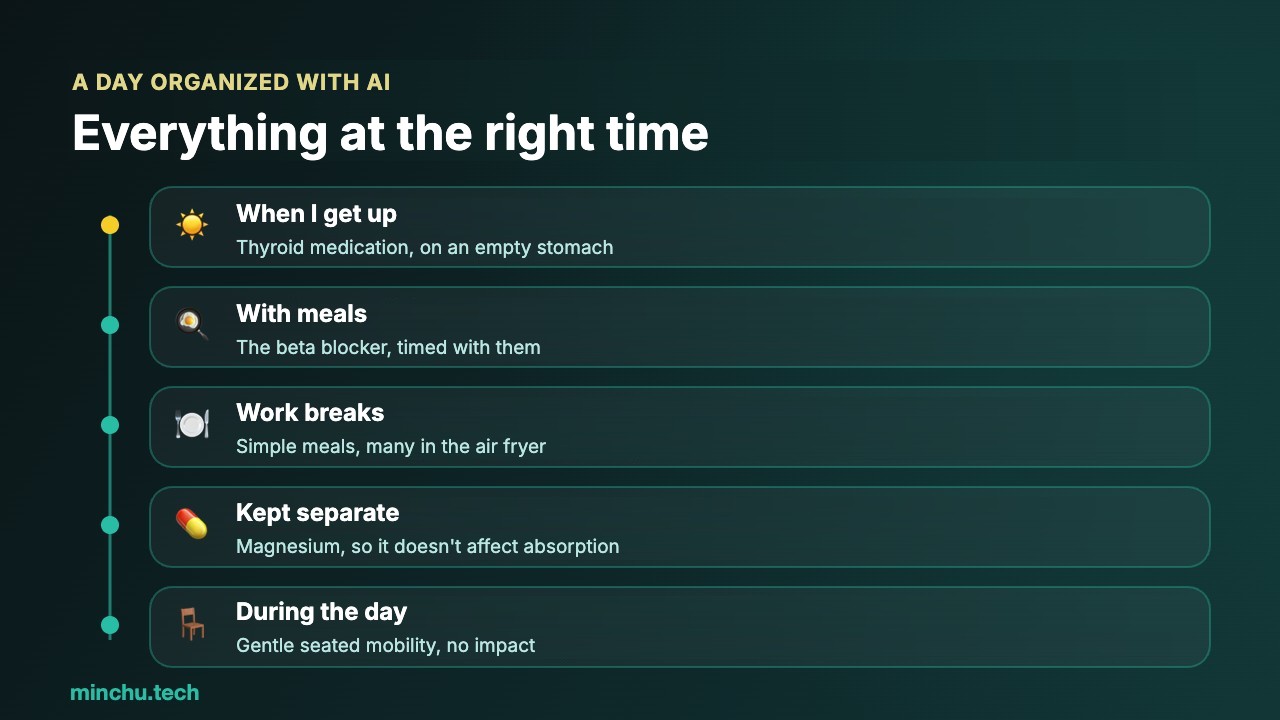
I take thyroid medication, a beta blocker, and magnesium, and timing matters. I gave AI my whole day, from when I get up to when I go to bed, and it made me a schedule: the thyroid medication on an empty stomach, the beta blocker with meals, and the magnesium kept separate from everything else so it doesn’t interfere with absorption. Before following it, I went over it with my doctor, who has the final say.
Moving without hurting myself
I hadn’t exercised in years, and I have joint pain that’s still waiting for a diagnosis from the rheumatologist. Right now going for a walk hurts, so for the moment I do gentle seated mobility and exercises to get my circulation going without putting load on my joints. Walking is the next step, when my body lets me.
What I track every week
Every week I log my weight, physical activity, and how I’ve slept, and AI turns it into charts and a forecast for the coming months. I keep the numbers to myself, but I’ll show you the trend:
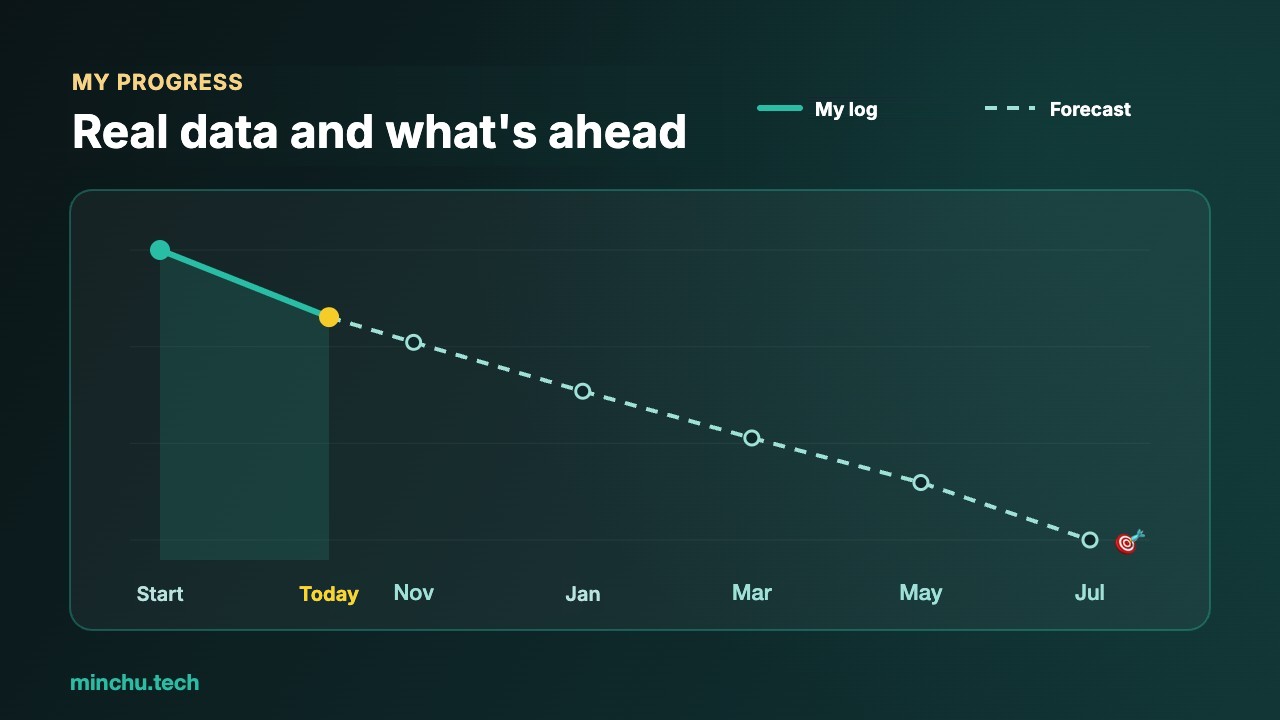
Even so, what has encouraged me most doesn’t show up on any chart: I’m already wearing clothes I hadn’t been able to wear in months.
Where I stand after two months
AI doesn’t eat for me or hold off the 10 p.m. hunger for me. That’s still on me. What it has done is take the improvisation out of it: I know what I’m going to eat, when I take each thing, and what exercise I can do without hurting myself. With my shifts, that’s already half the battle.
If you feel like trying something similar, use it to get organized, but make medical decisions with your doctor. And pay close attention to what health data you share and with which service.
How about you? Have you used AI to eat better, move more, or sleep better? How do you handle nighttime hunger? Tell me in the comments.